

/ EN
Technical Support
| Contact Us
+1 312-802-6843
Technical Support
Contact Us
+1 312-802-6843
/ EN
Recover password
Professional Email
Verification Code
Send Code
Password
Recombinant Rabbit Monoclonal
Anti-L-Lactyl-Histone H2B (Lys5) Rabbit mAb
Catalog Number: PTM-1435RM
$ 435

Clone Number: JMMR-P2633

Host: Rabbit Clonality: Recombinant Monoclonal

Applications: WB ICC/IF

Reactivity: Human, Mouse, Rat

Synonyms: H2BK5la

Product Size
100μl
Quantity

Shipping: Ambient temperature

Order online or send purchase order to info@ptmbio.com

FAQ Technical Support Protocols

General Information
Isotype /
Conjugate Unconjugated
Synonyms H2BK5la
UniProt ID

P62807

Immunogen L-lactylated human histone H2B (Lys5) peptide
MW (kDa) 14
Specificity Anti-L-Lactyl-Histone H2B (Lys5) Rabbit mAb detects histone H2B only when it is L-lactylated at Lys5.
Product Usage Information
Applications Dilution Recommended Species
WB 1:1000-1:5000 Human, Mouse, Rat
ICC/IF 1:50-1:250 Human
Properties
Purity Protein A purified
Constituents PBS, Glycerol, BSA
Storage Store at -20°C. Avoid freeze/thaw cycles.
Stability Stable for 12 months from date of receipt/reconstitution.
Target Information

Background

Histones are subjected to a variety of enzyme catalyzed modifications, including acetylation, methylation, phosphorylation, ubiquitylation, etc. The Warburg effect, which originally described increased production of lactate in cancer, is associated with diverse cellular processes such as angiogenesis, hypoxia, polarization of macrophages and activation of T cells. This phenomenon is intimately linked to several diseases including neoplasia, sepsis and autoimmune diseases. Lactate, which is converted from pyruvate in tumor cells, is widely known as an energy source and metabolic by-product. Zhang et al. (Nature, 2019) reveal that histone lactylation is a previously unknown histone modification, derived from the cellular metabolite lactate.

Cellular location

/

Images
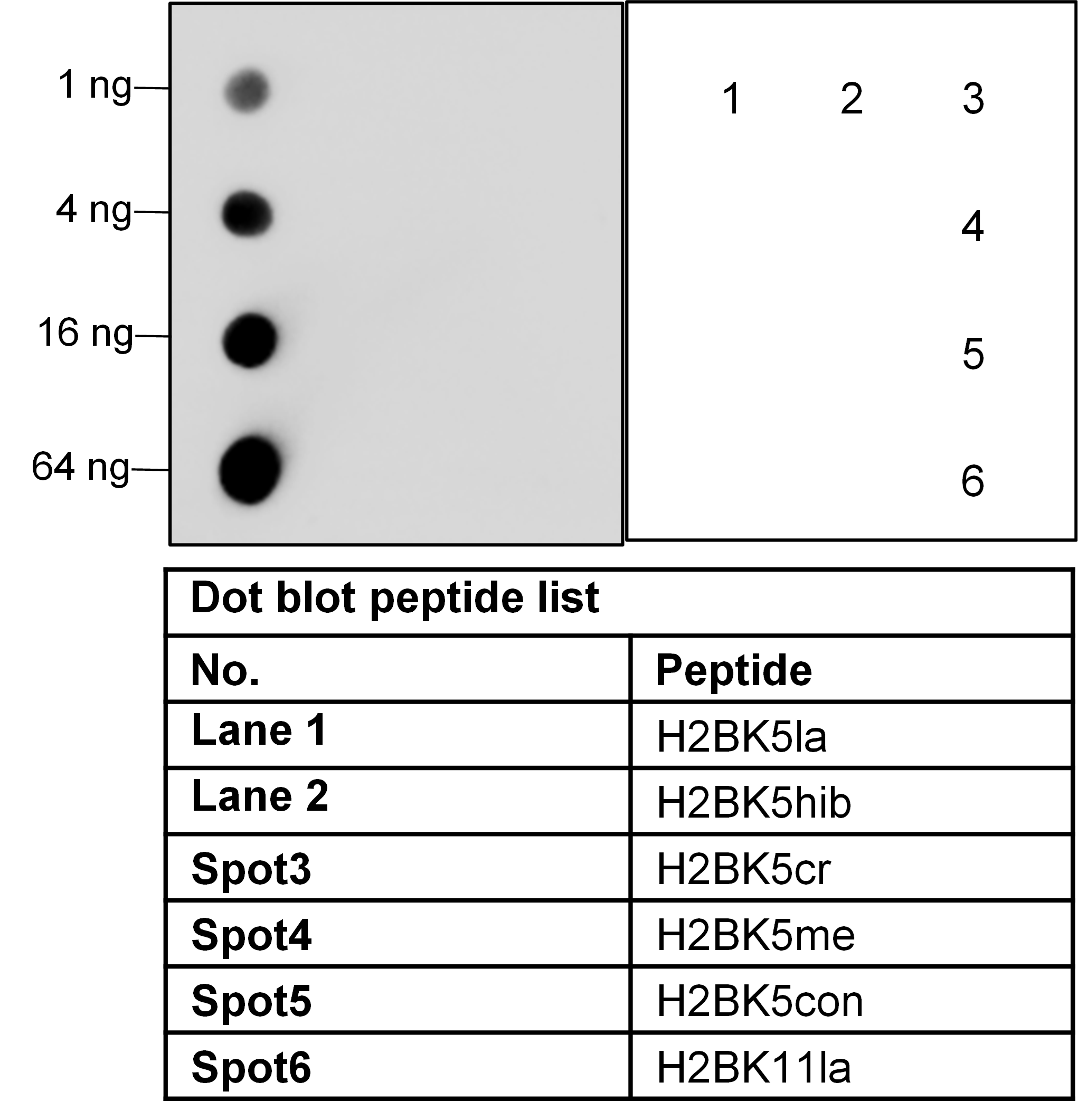
Dot Blot

Blocking buffer: 5% NFDM/TBST
Primary ab dilution: 1: 2000
Primary ab incubation condition: 2 hours at room temperature
Secondary ab: Goat Anti-Rabbit IgG H&L (HRP)
Peptide amount: Lane 1 and Lane 2:1 ng, 4 ng, 16 ng, 64 ng; Other spots: 64ng
Exposure time: 10 s

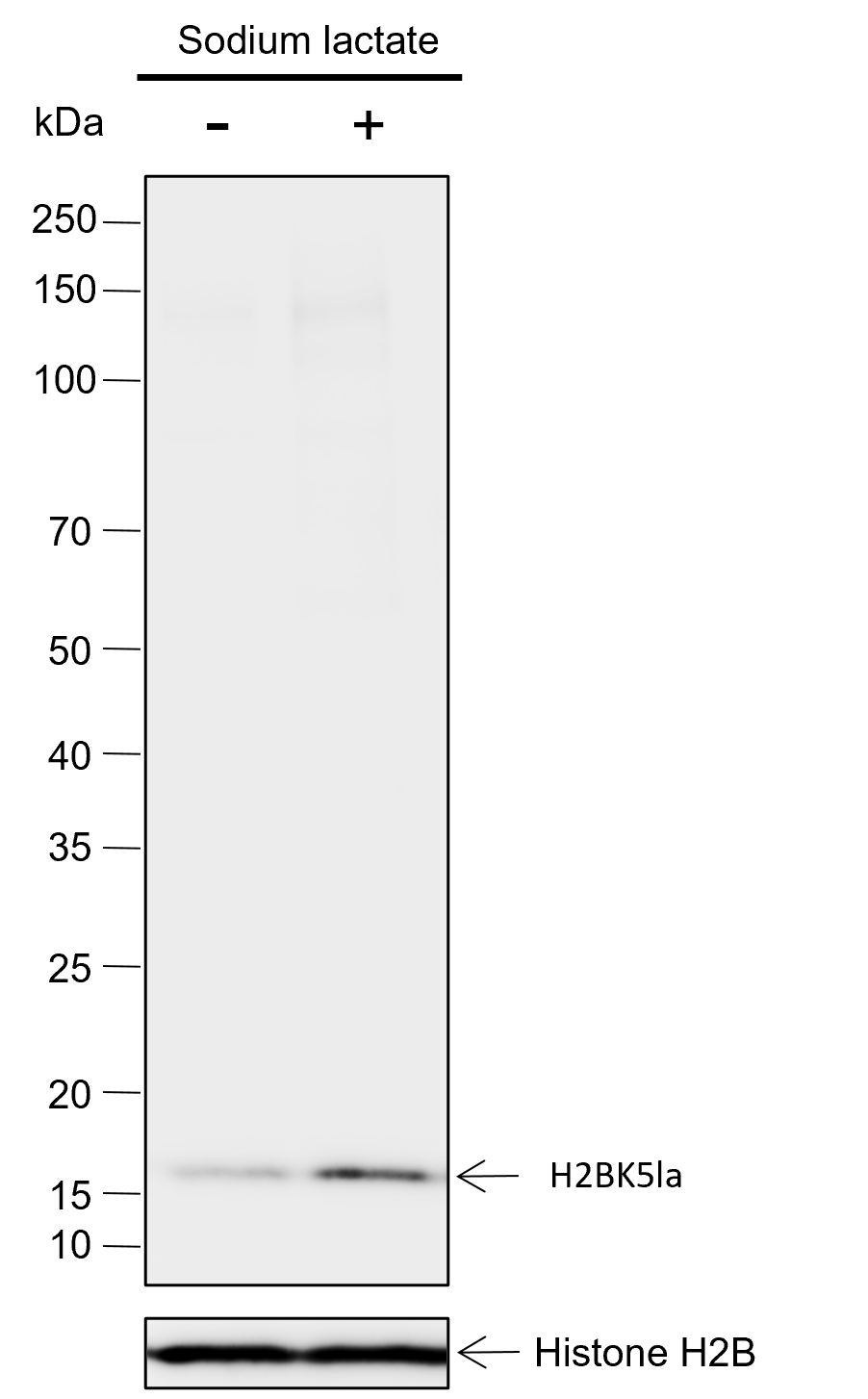
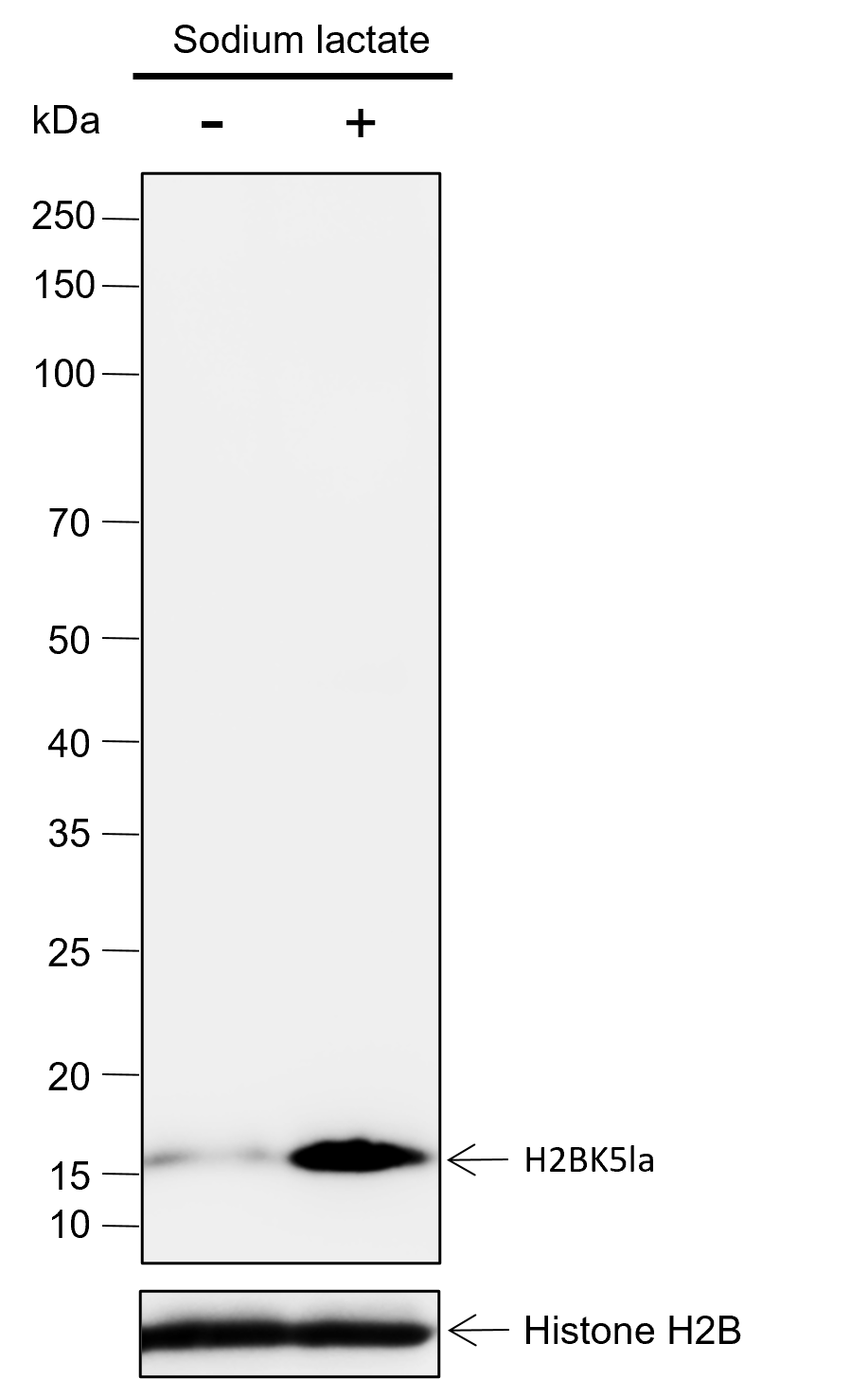
WB

Blocking buffer: 5% NFDM/TBST
Primary Ab dilution: 1:2000
Primary Ab incubation condition: 2 hours at room temperature
Secondary Ab: Goat Anti-Rabbit IgG H&L (HRP)
Lysate: (-): HeLa, (+): HeLa+Lac Na (100mM, 24h)
Protein loading amount: 20 μg
Exposure time: 60 s
Predicted MW: 14 kDa
Observed MW: 14 kDa

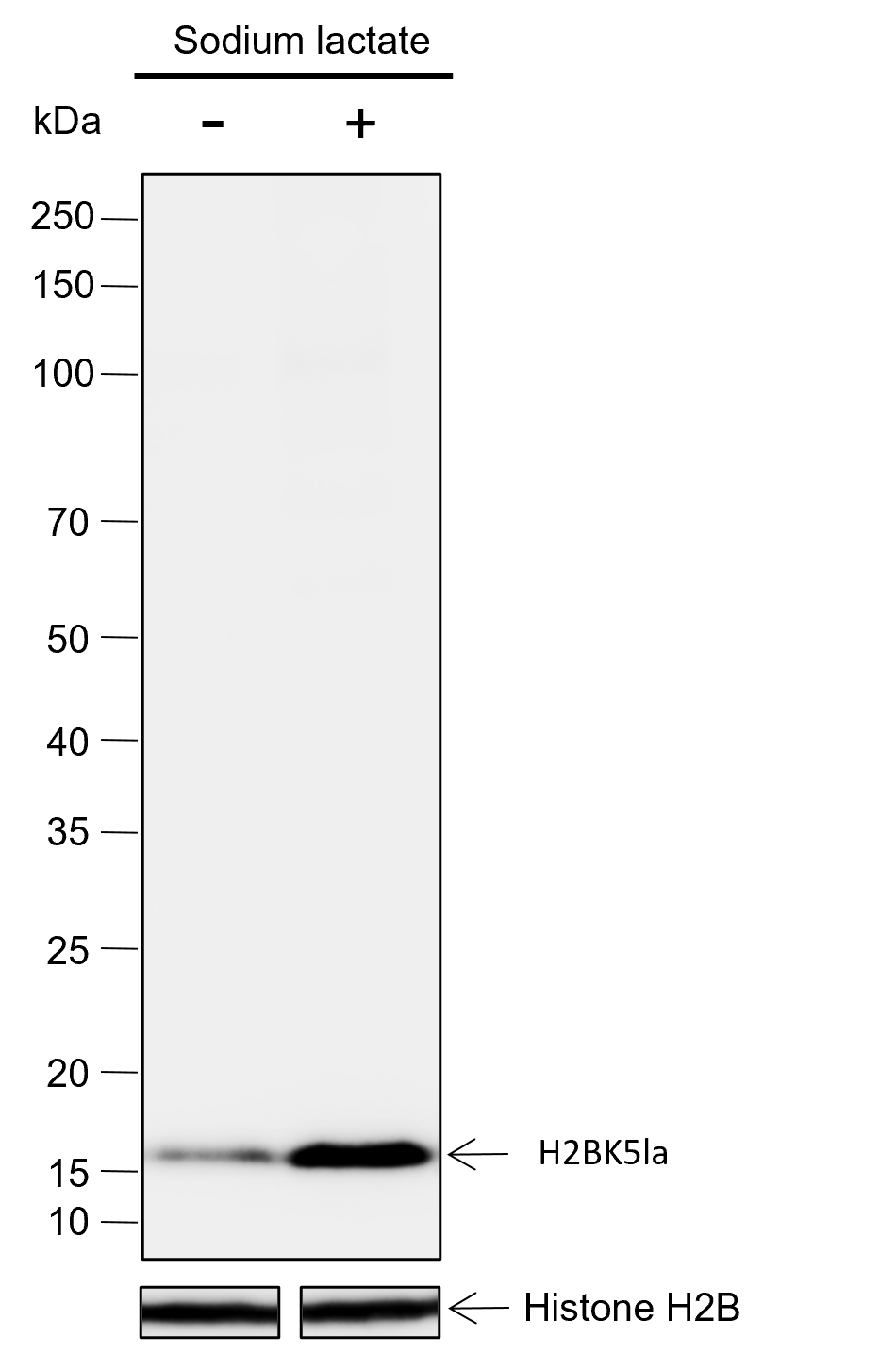
Blocking buffer: 5% NFDM/TBST
Primary Ab dilution: 1:2000
Primary Ab incubation condition: 2 hours at room temperature
Secondary Ab: Goat Anti-Rabbit IgG H&L (HRP)
Lysate: (-): Neuro-2a, (+): Neuro-2a+Lac Na (25mM, 24h)
Protein loading amount: 20 μg
Exposure time: 60 s
Predicted MW: 14 kDa
Observed MW: 14 kDa

Blocking buffer: 5% NFDM/TBST
Primary Ab dilution: 1:2000
Primary Ab incubation condition: 2 hours at room temperature
Secondary Ab: Goat Anti-Rabbit IgG H&L (HRP)
Lysate: (-): PC-12, (+): PC-12+Lac Na (25mM, 24h)
Protein loading amount: 20 μg
Exposure time: 60 s
Predicted MW: 14 kDa
Observed MW: 14 kDa

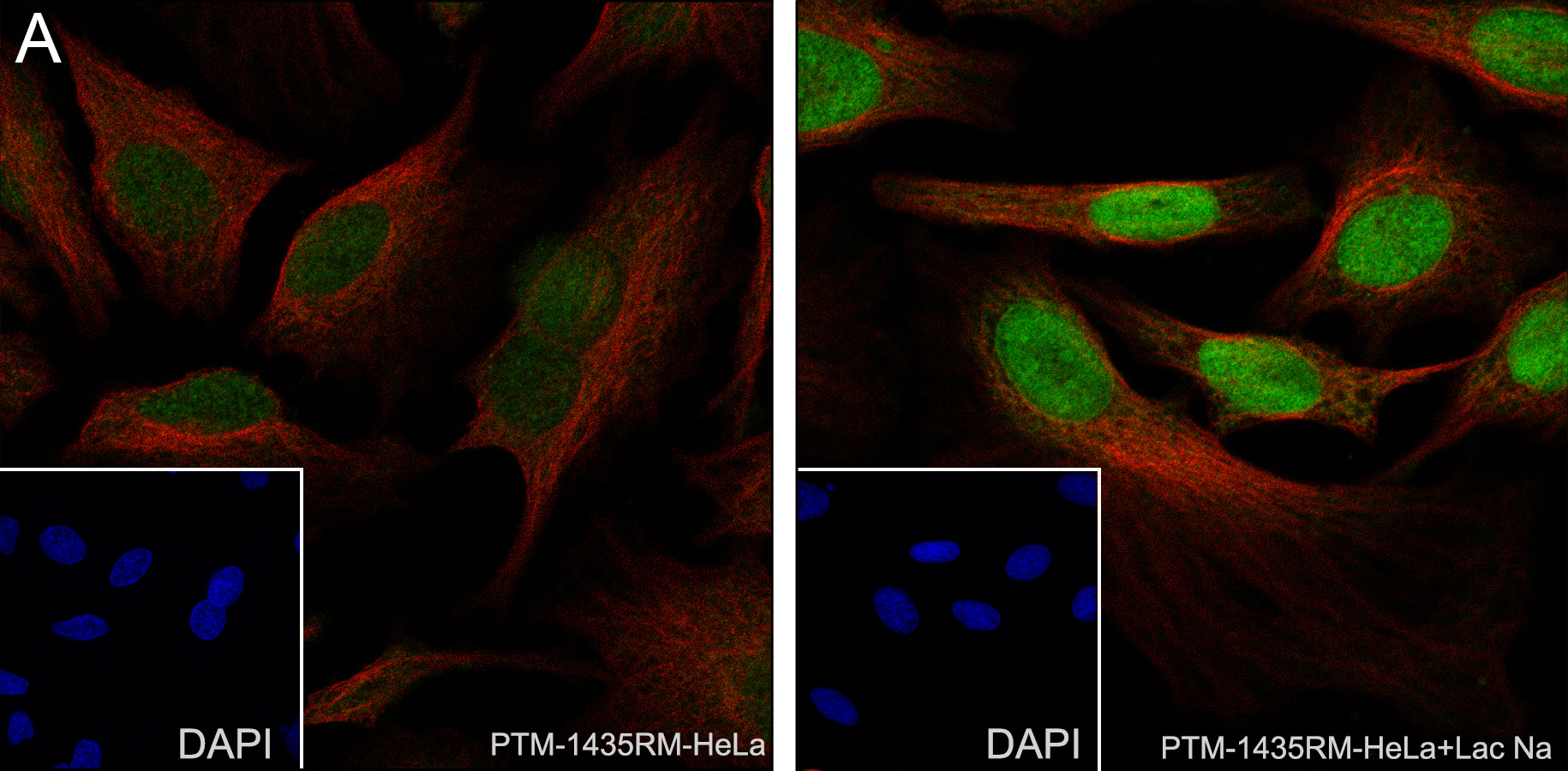
ICC/IF

Cell line: (A) HeLa, (B)HeLa+ sodium lactate (100mM, 24hr)
Fixation: 100% ice-cold methanol
Permeabilization: 0.1% Triton X-100
Primary Ab dilution: 1:100
Primary Ab incubation condition: 4℃ overnight
Secondary Ab: Goat Anti-Rabbit IgG
Nuclear counter stain: DAPI (blue)
Counter stain: Tubulin (red)
Comment: Color green is the positive signal for PTM-1435RM

Research Use

For research use only, not for use in diagnostic procedures.