



Interested in our services
Contact our experts to provide further information




Biomarkers are objective medical signs (as opposed to symptoms reported by the patient) used to measure the presence or progress of disease, or the effects of treatment. Biomarkers can have molecular, histologic, radiographic, or physiological characteristics.Most of the disease-related biomarkers that have been discovered are transcription factors, cell surface receptors or other secreted proteins.Machine learning (ML) refers to data analysis and establishment of appropriate and effective detection or verification models and is an important branch of artificial intelligence (AI). Integrating large-scale clinical proteomics cohort and machine learning has been proved effective in disease biomarkers discovery.
Analysis workflow including feature selection, machine learning model building, model evaluation and result visualization.
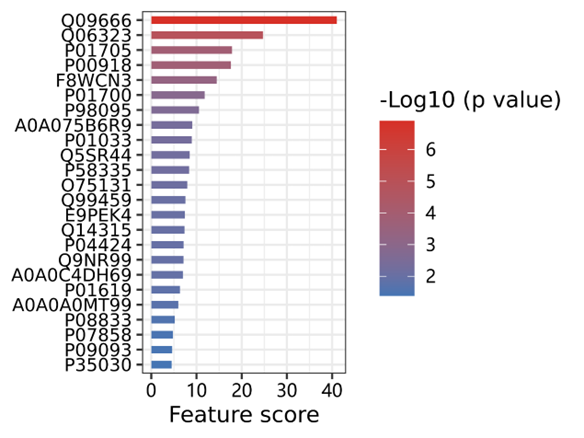
Barplot of the proteins with Top30 variance score(ANOVA).
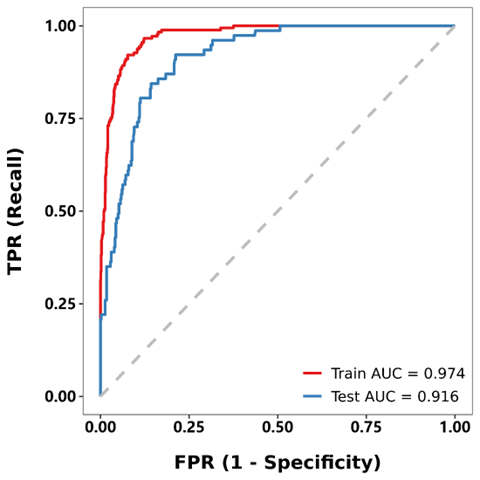
ROC curve of the global optimal model.
The ROC curve is used to evaluate the performance of optimal model, the horizontal axis is the false positive rate, and the vertical axis is the false positive rate. The closer the AUC value is to 1, the better the performance of the model.
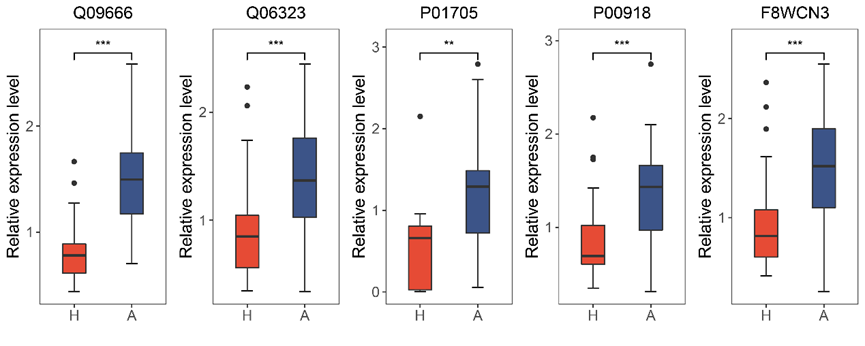
Boxplot of the expression level of the optimal marker.
Circulating proteomic panels for diagnosis and risk stratification of acute-on-chronic liver failure in patients with viral hepatitis B-2019-Theranostics
Interested in our services
Contact our experts to provide further information