



Interested in our services
Contact our experts to provide further information




Epigenetic regulation shapes spatiotemporal gene expression, and complex biological processes are rarely controlled by a single factor. Although conventional single-target CUT&Tag provides precise maps of chromatin occupancy, studying histone modification crosstalk, multi-factor co-occupancy, and transcription factor–chromatin interactions often require multiple experiments. This increases sample consumption, turnaround time, and batch effects, while co-localization is typically inferred indirectly from overlapping peaks.
PTM BIO’s Hi-Plex CUT&Tag (HCT) enables simultaneous profiling of 3–30 chromatin targets in a single experiment using barcoded antibodies. The platform supports classical histone marks, histone novel acylations, transcription factors, and transcriptional regulators. In addition to high-quality single-target maps, Heterotone signals reveal target co-occupancy on the same chromatin fragments, enabling more direct analysis of combinatorial epigenetic regulation, cis-regulatory elements, and cell-state transitions.
Our end-to-end service includes custom panel design, sample quality assessment, experimental profiling, and advanced bioinformatics. The low-input workflow is particularly well suited for limited clinical specimens, rare cell populations, and other sample-constrained studies.
Hi-Plex CUT&Tag extends conventional CUT&Tag with a multiplexed antibody-barcoding system, enabling simultaneous profiling of multiple chromatin targets in a single reaction. Target-specific primary antibodies are conjugated to unique barcoded adapters and bind their corresponding chromatin sites within the same sample. Tn5 transposase then fragments nearby DNA and inserts sequencing adapters. After next-generation sequencing, bioinformatic analysis assigns each signal to its corresponding barcode.
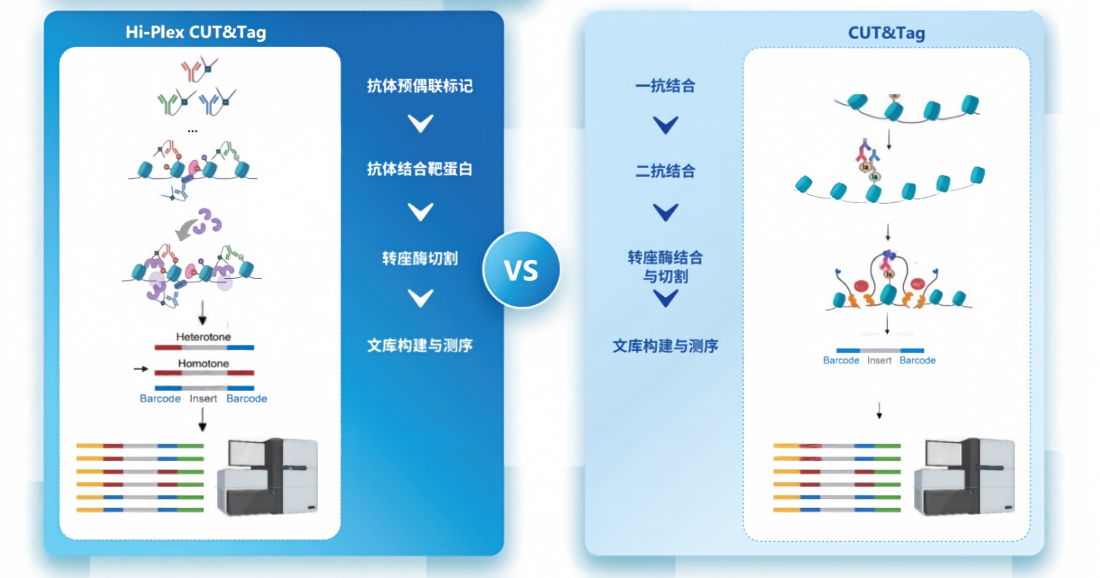
Figure 1. Workflow comparison of Hi-Plex CUT&Tag and CUT&Tag
Homotone: Both ends of a DNA fragment carry barcodes from the same antibody, generating target-specific genome-wide binding profiles comparable to CUT&Tag.
Heterotone: The two ends carry barcodes from different antibodies, indicating co-occupancy of two targets on the same chromatin fragment. This enables more direct analysis of combinatorial regulation than conventional peak-overlap approaches.
Simultaneously profile 3–30 epigenetic targets, reducing sample consumption, experimental time, and batch-to-batch variation.
Heterotone signals capture target co-occupancy on the same DNA fragment, providing a more direct view of coordinated chromatin regulation.
Profile up to 30 targets from approximately 100,000 starting cells, making the workflow well suited for biopsies, rare cell populations, organoids, and other limited samples.
Internal validation demonstrated strong reproducibility, sensitivity, and signal-to-noise performance. Single-target profiles showed high concordance with public ENCODE ChIP-seq datasets.
Our service covers custom panel design, experimental optimization, and advanced bioinformatics, with integration of proteomics and PTMomics results to support the full workflow from target discovery to mechanistic validation.
PTM BIO evaluated Hi-Plex CUT&Tag across multiple 5-plex and 10-plex studies, assessing reproducibility, sensitivity, signal-to-noise ratio, and accuracy.
Homotone signals were highly consistent across biological replicates, with Pearson correlation coefficients of 0.95 or higher. Activating and repressive histone marks were clearly distinguished, while functionally related targets showed strong concordance.
Across internal studies, the median number of peaks exceeded 25,000 per target, supporting robust detection of histone modifications, transcription factors, and other chromatin-associated targets.
FRiP is a widely used metric for enrichment quality in ChIP-seq and CUT&Tag. Median FRiP values exceeded 15% across targets, substantially above the empirical 1% ENCODE benchmark for ChIP-seq, indicating strong target-specific enrichment and low background noise.
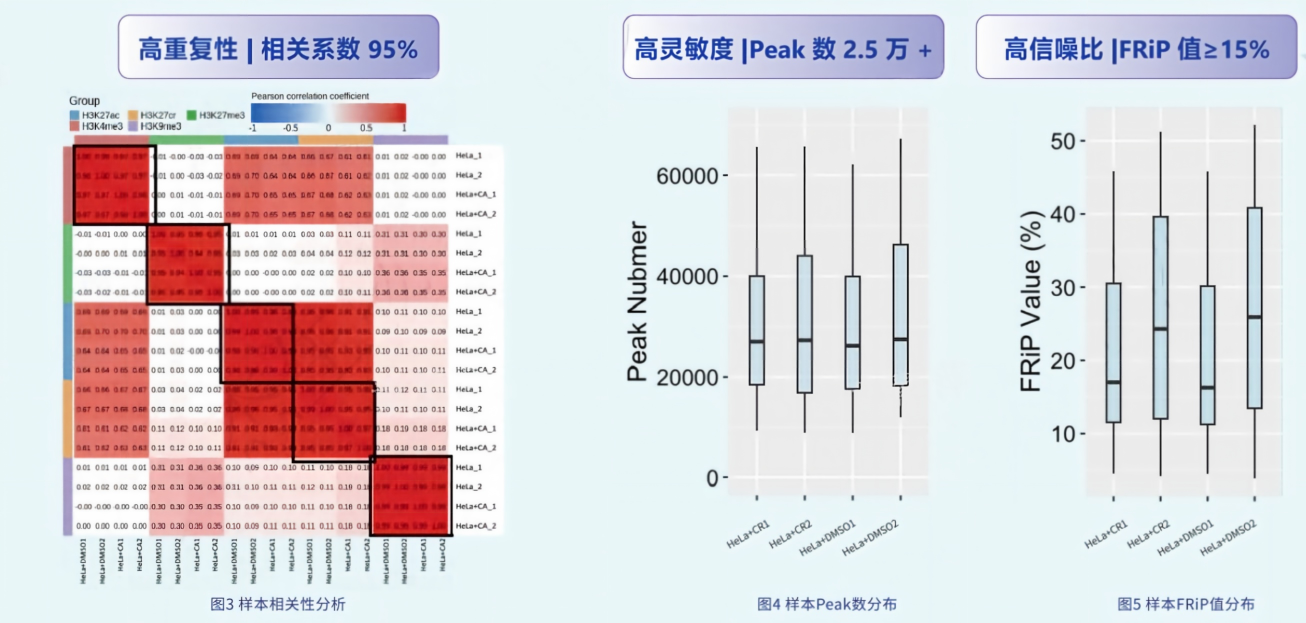
Figure 2. Multi-metric validation of Hi-Plex CUT&Tag performance using internal datasets
IGV visualization of Homotone profiles from a 10-plex HCT study showed strong agreement with public ENCODE ChIP-seq datasets. Canonical marks—including H3K27ac, H3K27me3, H3K4me3, and H3K9me3—displayed consistent peak locations, signal patterns, and genome-wide distributions, supporting the accuracy of target-specific profiling.
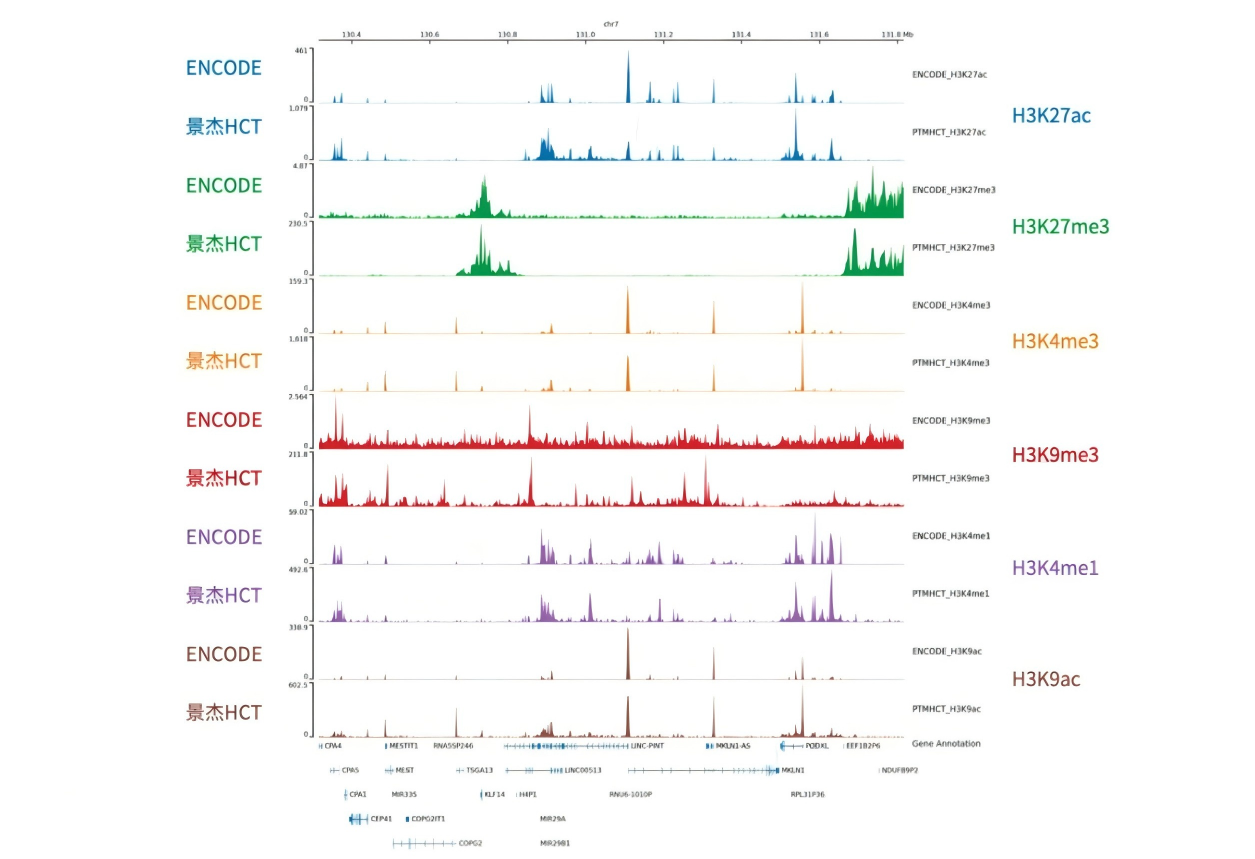
Figure 3. IGV comparison of 10-plex HCT Homotone profiles with ENCODE reference datasets
In a 5-plex study using crotonate-treated HeLa cells, HCT detected the expected global increase in H3K27cr, consistent with Western blot results. Heterotone signals further revealed the co-occupancy patterns of H3K27cr with activating marks such as H3K27ac and repressive marks such as H3K27me3.
These findings were consistent with published research showing that H3K27cr can define a distinct, reversible transcriptionally repressive chromatin state, rather than functioning exclusively as an activating mark [2]. The results demonstrate the value of HCT for characterizing emerging histone modifications and uncovering previously unrecognized regulatory mechanisms.
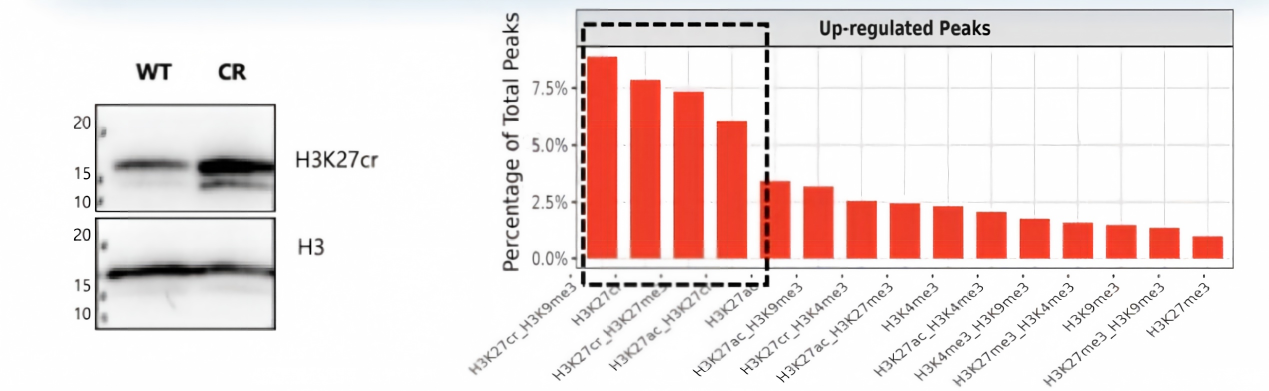
Figure 4. HCT confirms the expected increase in H3K27cr following crotonate treatment
Study histone modification crosstalk, emerging histone acylations, cis-regulatory elements, chromatin-state transitions, and coordinated regulation by transcription factors and histone marks.
Investigate tumor progression, patient stratification, drug response and resistance, and tumor–immune interactions using limited clinical specimens.
Track dynamic epigenetic remodeling during embryonic development, stem cell differentiation, reprogramming, and lineage commitment, including bivalent chromatin and enhancer activation [3–4].
Characterize epigenetic changes associated with immune responses, metabolic reprogramming, aging, and drug treatment to identify key regulatory combinations and pathways.
Follow up candidates identified by proteomics or PTM profiling by mapping their genomic occupancy, regulatory elements, and co-regulatory relationships.
Explore epigenetic regulation in stress responses, circadian rhythms, crop traits, plant development, and host–pathogen interactions.
[1] Liao et al. 2025. Global Mapping of Combinatorial Chromatin Regulatory Events Using Hi-Plex CUT&Tag. bioRxiv.
[2] Liu Y, et al. 2023. Histone H3 lysine 27 crotonylation mediates gene transcriptional repression in chromatin. Molecular Cell.
[3] Bernstein BE, et al. 2006. A bivalent chromatin structure marks key developmental genes in embryonic stem cells. Cell.
[4] Zhou Y, et al. 2025. Composite transposons with bivalent histone marks function as RNA-dependent enhancers in cell fate regulation. Cell.
Interested in our services
Contact our experts to provide further information