



Interested in our services
Contact our experts to provide further information




Dynamic protein–DNA interactions shape gene expression programs. Histone modifications, transcription factors, and other chromatin-associated proteins play key roles in gene activation, enhancer activity, cell fate determination, and disease progression. Mapping their genome-wide occupancy is essential for understanding epigenetic regulation.
CUT&Tag (Cleavage Under Targets and Tagmentation) is an epigenomic profiling method that performs targeted DNA cleavage and adapter insertion directly in situ. Target-specific antibodies bind proteins of interest, followed by recruitment of pA/G–Tn5 transposase, which fragments nearby DNA while simultaneously inserting sequencing adapters. After DNA purification, PCR amplification, and sequencing, genome-wide binding profiles can be generated.
PTM BIO provides an integrated CUT&Tag service covering antibody selection, standardized experiments, sequencing, and bioinformatics. The platform supports canonical histone marks, emerging histone acylations, transcription factors, and other chromatin-associated proteins, and can be integrated with transcriptomics, proteomics, and PTM profiling for downstream mechanistic studies.
CUT&Tag uses an antibody-guided Protein A/G–Tn5 transposase to target proteins of interest and fragment nearby DNA for sequencing.

Figure 1. Workflow of CUT&Tag and ChIP-seq [1]
In situ targeted tagmentation reduces background from free DNA and improves the fraction of informative reads, making CUT&Tag well suited for limited or difficult-to-obtain samples.
Signals are concentrated at target-bound regions, generating well-defined enrichment profiles while reducing unnecessary background sequencing.
Supports genome-wide profiling of histone modifications, RNA polymerase II, transcription factors, and other chromatin-associated proteins.
Backed by more than a decade of antibody development experience, PTM BIO provides rabbit monoclonal antibodies optimized for chromatin research, with emphasis on specificity, affinity, and lot-to-lot consistency.
Supports studies of lactylation, succinylation, benzoylation, 2-hydroxyisobutyrylation, β-hydroxybutyrylation, and other novel histone modifications—from global profiling to site-specific mechanistic studies.
From target and antibody evaluation to sample QC, library preparation, sequencing, and standard or customized bioinformatics, our workflow supports seamless integration with multi-omics studies.
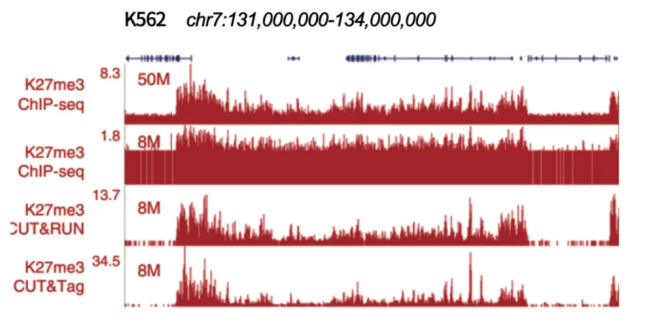
Figure 2. IGV comparison of ChIP-seq, CUT&Tag, and CUT&RUN at different sequencing depths
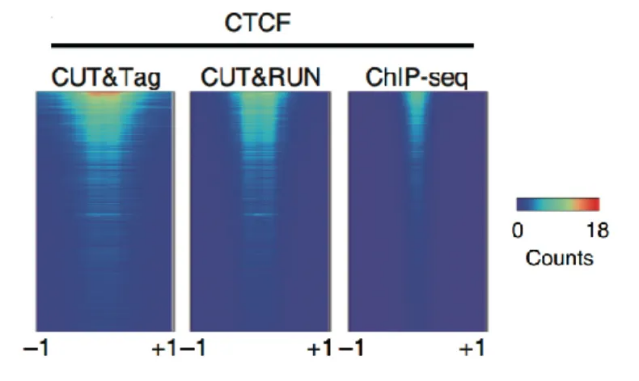
Figure 3. Strong CTCF signal observed with CUT&Tag in a parallel comparison
PTM BIO has performed internal CUT&Tag validation for histone lactylation targets, covering library quality, genome-wide signal profiles, peak annotation, transcription start site enrichment, and downstream functional analysis.
Library fragments were primarily distributed between approximately 200–700 bp, supporting downstream sequencing and analysis.
H3K18la and H4K8la showed clear genome-wide enrichment, while IgG controls displayed low background, indicating effective target-specific enrichment.
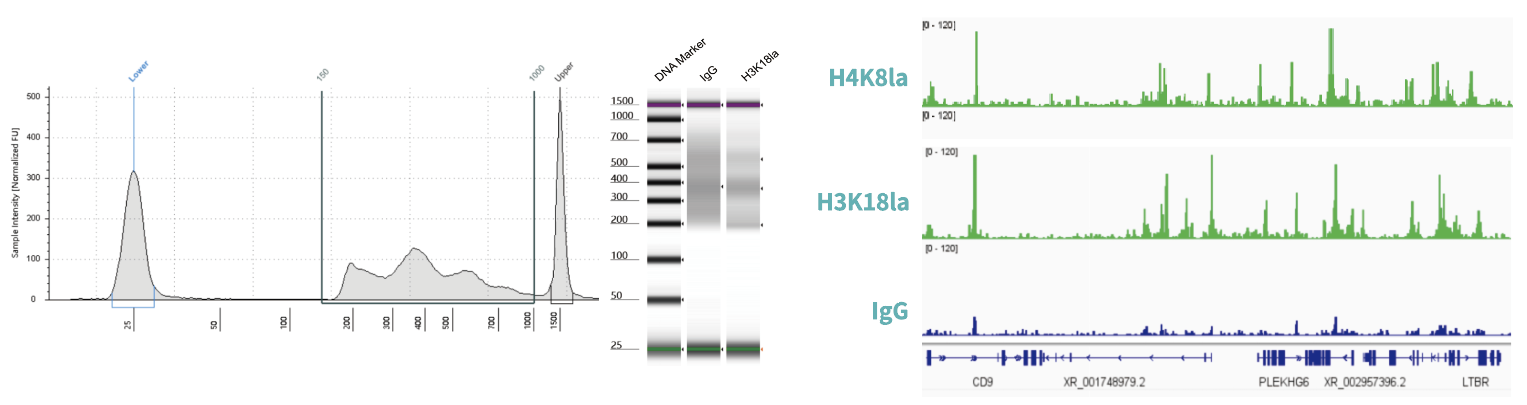
Figure 4. Library QC and Integrative Genomics Viewer (IGV) of H3K18la, H4K8la, and IgG controls
Peaks can be annotated across promoters, exons, introns, transcription termination sites, and intergenic regions. Aggregate plots and heatmaps around transcription start sites help characterize target distribution across regulatory regions.
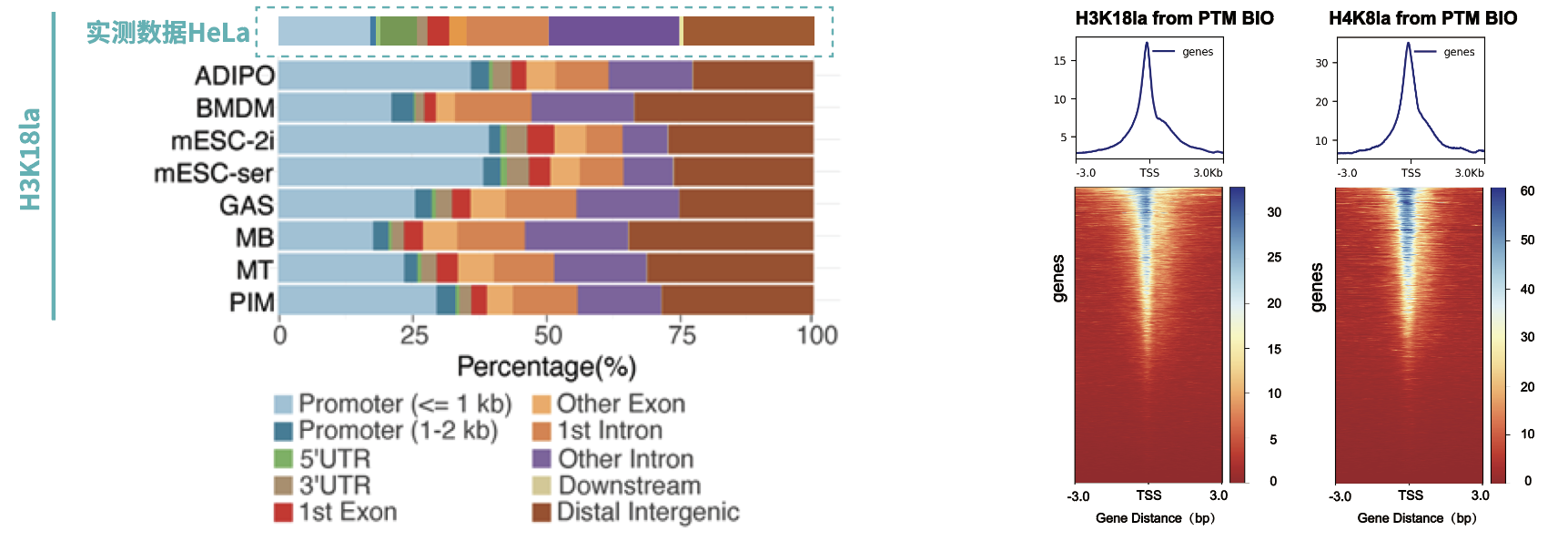
Figure 5. Peak annotation and TSS enrichment heatmap
Genes associated with CUT&Tag peaks can be analyzed using KEGG and GO enrichment to identify candidate regulatory pathways and support downstream target prioritization and validation.
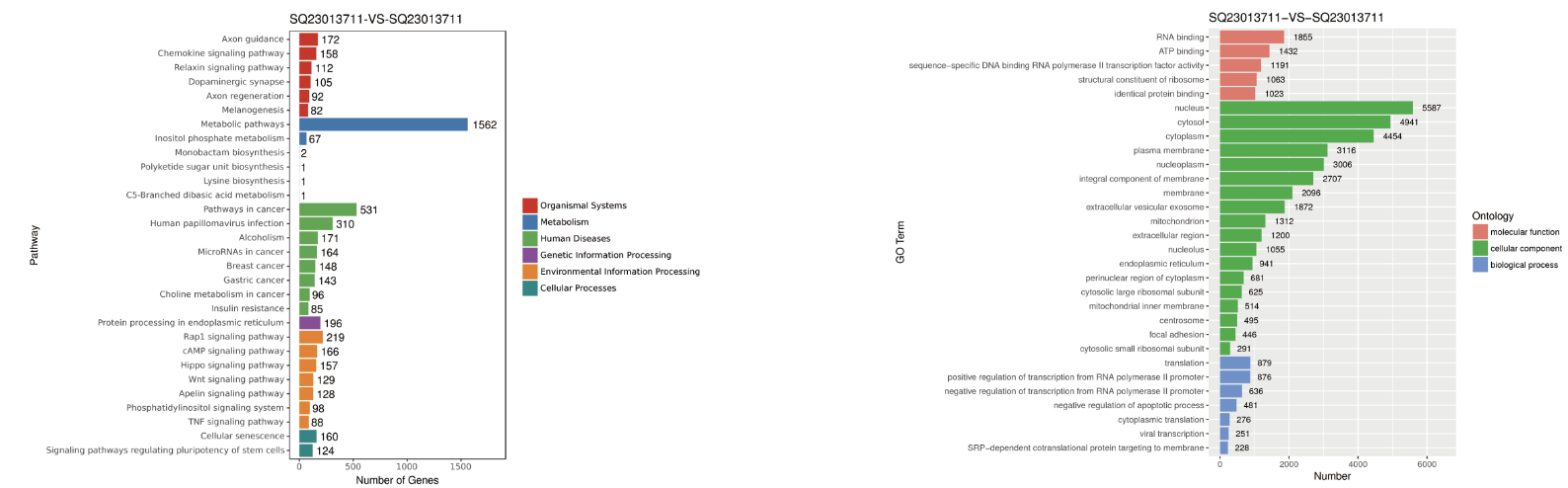
Figure 6. KEGG and GO enrichment analysis of peak-associated genes
Map genome-wide distributions of canonical and emerging histone modifications and characterize regulatory activity at promoters, enhancers, and other genomic elements.
Identify genomic binding regions and candidate target genes, with motif analysis to explore co-regulatory networks.
Identify highly active regulatory regions associated with cell identity or disease states when appropriate target markers are used.
Compare epigenetic changes across disease, treatment, or drug-resistant conditions to identify potential regulatory mechanisms and therapeutic targets.
Track chromatin regulatory programs across developmental stages, differentiation states, and cell populations.
Integrate CUT&Tag with transcriptomics, proteomics, and PTM profiling to connect protein/PTM changes, chromatin occupancy, target gene expression and phenotype.
Nature Communications
Sox9 regulation of hexokinase 1 controls neuroinflammatory astrocyte subtypes in a rat model of neuropathic pain
In a rat model of neuropathic pain, CUT&Tag was used to map genome-wide H3K9la distribution. H3K9la enrichment at promoter regions was associated with inflammatory pathways including NF-κB, JAK–STAT, and PI3K–AKT, as well as candidate genes such as Gfap, C3, and Cfb. The study proposed a Sox9–HK1–H3K9la axis involved in regulating neuroinflammatory astrocyte states.
Gut
Histone lactylation-driven feedback loop modulates cholesterol-linked immunosuppression in pancreatic cancer
This study integrated proteomics and lactylation proteomics profiling with CUT&Tag, RNA-seq, IP–MS, and GST pull-down to investigate H3K18la- and ACAT2-associated regulatory mechanisms, revealing links among histone lactylation, cholesterol metabolism, and tumor immunosuppression.
The study illustrates how CUT&Tag can bridge PTM discovery, chromatin localization, target-gene identification, and mechanistic validation.
1. Kaya-Okur HS, et al. CUT&Tag for efficient epigenomic profiling of small samples and single cells. Nature Communications. 2019.
2. Galle E, et al. H3K18 lactylation marks tissue-specific active enhancers. Genome Biology. 2022.
3. Chen Y, et al. Sox9 regulation of hexokinase 1 controls neuroinflammatory astrocyte subtypes in a rat model of neuropathic pain. Nature Communications. 2025.
4. Yang J, et al. Histone lactylation-driven feedback loop modulates cholesterol-linked immunosuppression in pancreatic cancer. Gut. 2025.
Interested in our services
Contact our experts to provide further information