



Interested in our services
Contact our experts to provide further information




Metaproteomics is a novel technique that applies proteomics to study microbial communities, enabling large-scale identification of all proteins in a microbial community at a specific time. Metaproteomics provides functional information of microorganisms in the ecosystem, linking genetic and functional diversity of microbial communities. Analysis of different environmental microorganisms using metaproteomics can identify new functional genes and metabolic pathways, as well as proteins related to specific stress. When combined with metagenomic data, proteomics can better reveal the taxonomic diversity, functional diversity, and biological processes of environmental communities.
The combination of cutting-edge technologies, such as non-standard quantitative techniques, high-performance liquid chromatography grading, and mass spectrometry-based quantitative proteomics, allows for quantitative macro-proteomics research on samples.
1. Metaproteomics uncovers a new mechanism of inflammatory bowel disease in children
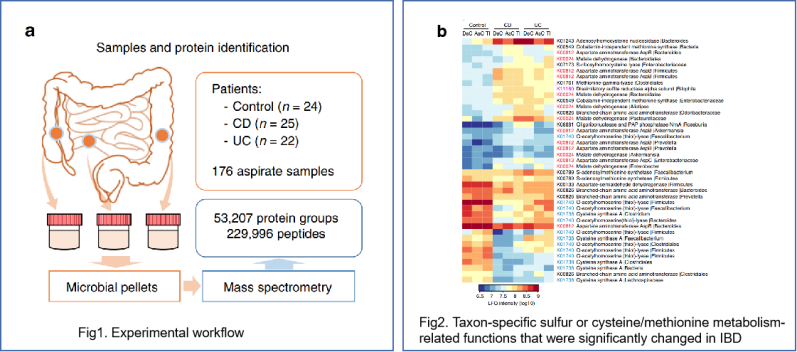
The team of Professor Daniel Figley’s from the University of Ottawa in Canada used metaproteomics technology to combine intestinal microbiome and exosome research to conduct a large-scale intestinal microbial proteomics study of children's first onset IBD, which deeply revealed the correlation information between the occurrence and development of IBD and the host-microbiota interaction mechanism.
2.Metaproteomics demystifies the state of the human oral health in the Middle Ages
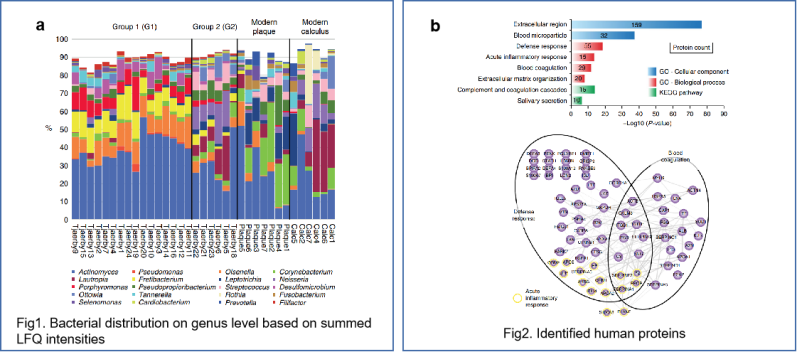
Researchers use proteomics techniques to reveal the characteristics of the oral microbiome in the Middle Ages and find out its relationship with diet, hygiene, etc. The results of bacterial and human metaproteomics analysis show that there are two major groups of healthy tendencies and pathogenic tendencies in medieval samples, which provide more molecular information research data for bioarcheological analysis.
Interested in our services
Contact our experts to provide further information