



Interested in our services
Contact our experts to provide further information




Protein phosphorylation is a post-translational modification in which phosphate groups from ATP or GTP are transferred to specific amino acid residues, including serine (Ser), threonine (Thr), and tyrosine (Tyr), under the catalysis of protein kinases.
Phosphorylation is one of the most widespread post-translational modifications. More than 30% of cellular proteins are estimated to undergo phosphorylation, making it one of the most fundamental, prevalent, and important mechanisms for regulating protein activity and function. Phosphorylation participates in a wide range of physiological and pathological processes, including cell proliferation, development, differentiation, and apoptosis, and is widely involved in signal transduction, cell cycle regulation, developmental biology, and cancer mechanism studies.
PTM BIO provides High-Depth Phosphoproteomics, a fully upgraded solution built on conventional quantitative phosphoproteomics, featuring:
1. Technology upgrade
Average project-level identification depth exceeds 10,000 phosphosites.
2. Quality control upgrade
Dual quality control using FDR and localization probability / site-confidence filtering, reducing low-confidence identifications and improving data reliability.
3. Bioinformatics upgrade
Includes kinase prediction, signaling pathway analysis, and in-depth data mining to support deeper biological interpretation.
Protein samples are first enzymatically digested into peptide mixtures. Phosphorylated peptides are then enriched using high-quality phospho-specific enrichment antibodies and biomaterials. Finally, the enriched peptides are analyzed and quantified by liquid chromatography–tandem mass spectrometry (LC-MS/MS).
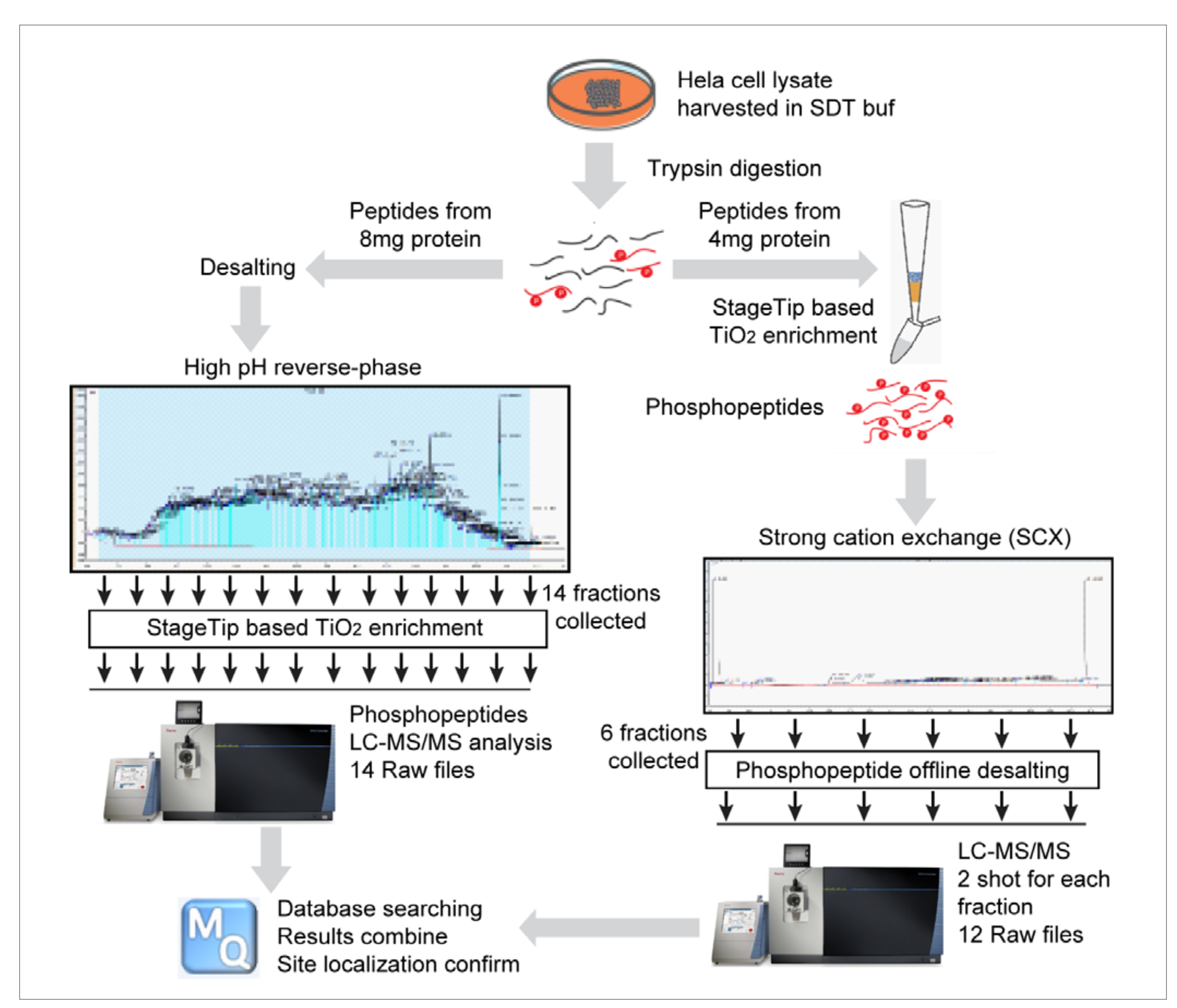
Widely applicable to research in signal transduction pathways, cell apoptosis, development and differentiation, and cancer mechanisms.
1.Z. Wang, et al., 2018, Quantitative phosphoproteomic analysis of the molecular substrates of sleep need. Nature.
2.Hoffman NJ, et al., 2015, Global Phosphoproteomic Analysis of Human Skeletal Muscle Reveals a Network of Exercise-Regulated Kinases and AMPK Substrates. Cell Metabolism.
Interested in our services
Contact our experts to provide further information