



Interested in our services
Contact our experts to provide further information




Glycosylation is a common and important post-translational modification, and glycoproteins are critical in maintaining normal physiological functions in the human body, making them a focus of modification omics research. Glycoproteins are also important biomarkers and protein drugs for the diagnosis of various diseases, and the analysis of glycoproteins with special functions is of great value. As a result, glycoproteomics was recognized as a Method to Watch in 2021.
However, the identification of glycoproteins remains one of the most challenging aspects of proteomics due to the diverse types of glycans that make up glycoproteins and the complex structure of sugar chains. The traditional method of N-glycoproteomic research involves removing glycans and analyzing the sugar chains separately from the modified polypeptide, but this approach can lead to the loss of important information regarding the correspondence between sugar chains and protein glycosylation sites.
Direct mass spectrometry analysis of intact N-glycopeptides allows for the simultaneous identification of both glycosylation sites and their topologies, providing valuable information on the correspondence between sugar chains and glycosylation sites. This approach overcomes the limitations of traditional N-glycoproteomic research, and enables more powerful studies of glycoproteomics for biomarker discovery and disease pathogenesis.
Intact N-glycopeptide analysis enables direct, site-specific characterization of glycosylation by simultaneously identifying the modified peptide site and its attached glycan structure. This allows researchers to accurately link glycans to specific glycosylation sites and decode site-specific glycoform information.
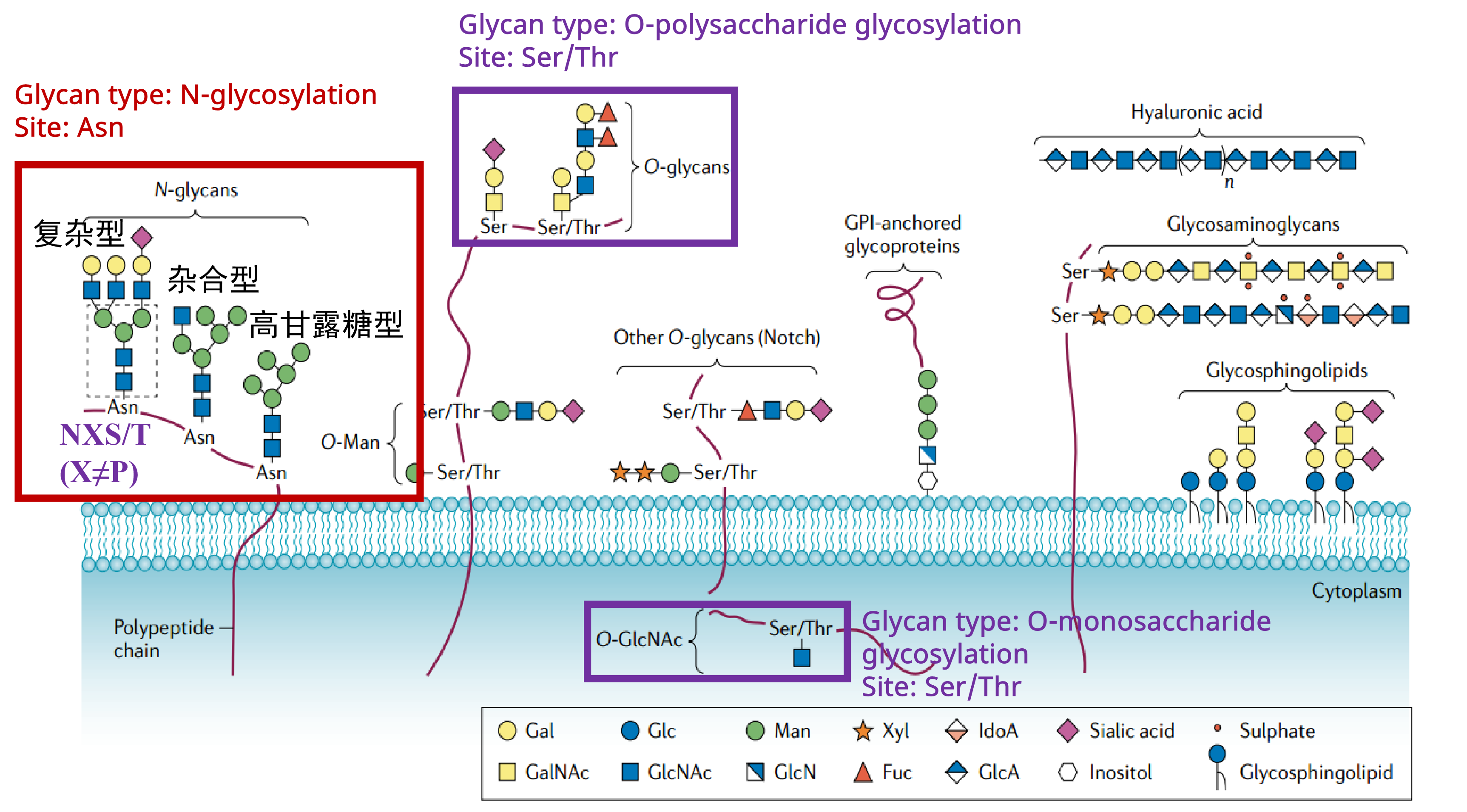 Figure 1. Common Types and Structures of Protein Glycosylation
Complete Glycosylation Information
Provides integrated information on glycoproteins, glycosylation sites, and intact glycan structures, enabling site-specific glycoform characterization.
High Sensitivity
Powered by the Thermo Scientific Q Exactive HF-X mass spectrometry platform for sensitive and reliable glycopeptide detection.
Quality Assurance
Internally validated through large-scale clinical cohort projects, ensuring robust and reproducible analytical performance.
In-Depth Data Analysis
Integrated with innovative PTM multi-omics analysis to enable deeper data mining and comprehensive biological interpretation.
1. Physiological mechanism studies
Glycosylation modifications have significant impacts on the spatial conformation, activity, transport, and localization of proteins. It is widely involved in various physiological processes, including intercellular recognition, regulation, signaling, immune response, and cell transformation.
2. Pathological research
Abnormal protein glycosylation modifications are often associated with pathological progression in many diseases, including cancer, neurodegenerative diseases, lung diseases, blood disorders, and genetic diseases. As a result, glycoproteins are potential biomarkers for diagnosis, prognosis and therapeutic monitoring of these diseases. Moreover, most glycoproteins are potential targets of drug action, making them an important class of targets in clinical and biological research.
3. Disease biomarkers
Glycosylated proteins are typically located on the surface of cells or are secreted into the circulatory system, making them easily accessible for analysis and potential use as biomarkers in disease diagnosis.
1. Cell | Potential therapeutic targets for pancreatic cancer and markers for early diagnosis
Intact N-glycopeptide techniques indicate that inhibition of associated glycoprotein biosynthesis could be used for early detection and therapeutic intervention of PDAC. There are 75 N-concatenated glycoproteins in PDAC that are significantly upregulated, and the upregulated glycoproteins are mainly sialic acid glycosylforms and/or fucose types. Focusing on their unique glycoforms may increase the specificity of cancer markers. Inhibition of associated glycosylase activity weakens upregulation of glycosylation modifications in tumors and may become a potential PDAC treatment strategy.
2. Nat Commun | Intact N-glycopeptides reveal high-grade serous ovarian carcinoma subtypes and clinical prognosis analysis
In this study, 119 HGSC tissue samples were analyzed by N-intact glycopeptide modification omics, and the cluster analysis divided all samples into three types of tumor subtypes, and the N-sugar structure showed a high correlation with the molecular typing of high-grade serous ovarian cancer, such as the correlation between fucosylation and mesenchymal subtypes. Further survival analysis showed that glycoprotein glycoform information (e.g., sialic acid glycosaccharide, high mannose) was associated with poor clinical prognosis in patients with HGSC.
Singh, A. Glycoproteomics. Nat Methods 18, 28 (2021).
Liwei Cao,et al.,2021,Proteogenomic characterization of pancreatic ductal adenocarcinoma.Cell.
Jianbo Pan,et al.,2020. Glycoproteomics-based signatures for tumor subtyping and clinical outcome prediction of high-grade serous ovarian cancer.Nature Communications.
Interested in our services
Contact our experts to provide further information