



Interested in our services
Contact our experts to provide further information




Protein glycosylation mainly occurs in the form of N-glycosylation and O-glycosylation. Among O-glycosylation types, mucin-type O-GalNAc glycosylation, initiated by the attachment of N-acetylgalactosamine (GalNAc) to serine or threonine residues, is one of the most abundant forms found on membrane and secreted proteins.
O-GalNAc glycosylation plays important roles in protein folding, stability, trafficking, and protein–protein interactions, and is involved in key biological processes such as inflammatory responses, host–pathogen interactions, cell adhesion, metastasis, and apoptosis. Increasing evidence has linked aberrant O-GalNAc glycosylation to the development and progression of infectious diseases, cancer, autoimmune disorders, metabolic diseases, cardiovascular diseases, and neurodegenerative diseases.
Despite its biological importance, O-GalNAc glycosylation remains challenging to study due to the complexity of modification sites and glycan structures, as well as the lack of efficient strategies for intact O-GalNAc glycopeptide analysis. These challenges have limited systematic investigation of O-GalNAc function and regulation. Therefore, large-scale identification of O-GalNAc-modified proteins, glycosylation sites, glycan structures, and their biological significance remains an important area of research.
Building on extensive experience in N-glycoproteomics, O-GlcNAc Glycoproteomics, and intact N-glycopeptidomics, PTM BIO has developed Intact O-GalNAc Glycoproteomics. This workflow enables simultaneous qualitative and quantitative analysis of O-GalNAc glycosylation sites and glycoforms without deglycosylation, and supports bioinformatics-based prediction of monosaccharide linkage patterns.

Figure. Technical Workflow for Intact O-GalNAc Glycoproteomics
1. Reliable Identification Depth
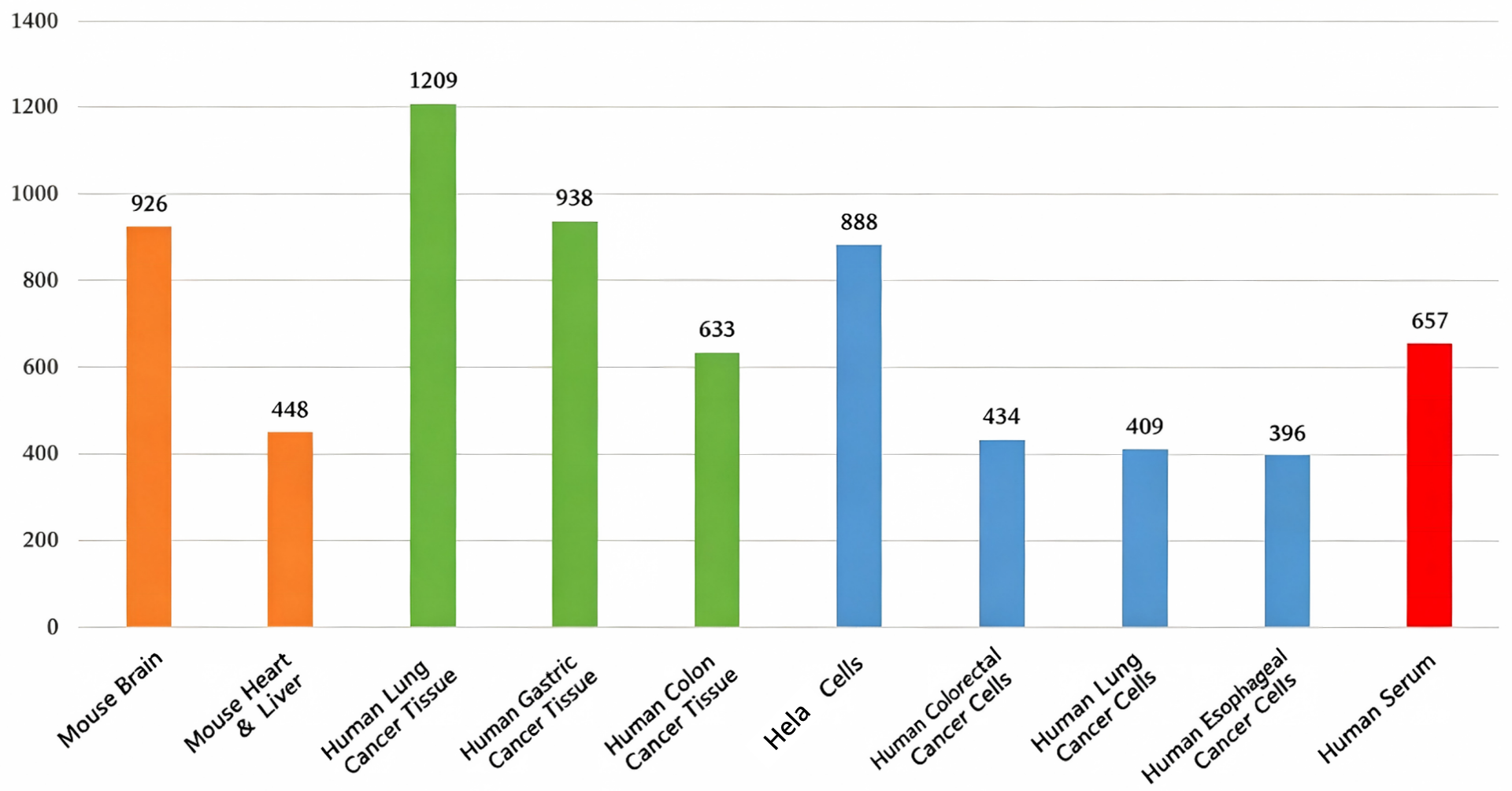
Figure: Number of O‑GalNAc glycopeptides identified per sample in internal testing.
2. Excellent Reproducibility and Stability
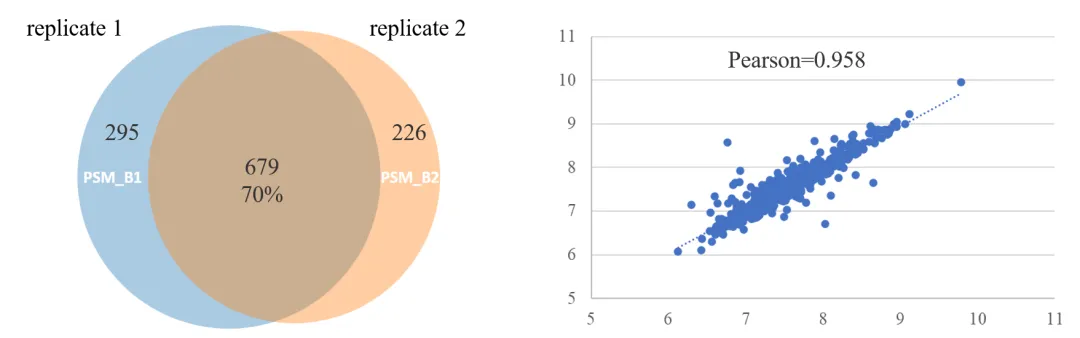
Figure. Reproducibility Test Results Using Biological Replicates
Blood-Based Biomarker Discovery
Because many circulating proteins and clinically relevant tumor biomarkers are glycoproteins, O-GalNAc Glycoproteomics provides a valuable tool for blood-based biomarker discovery and validation.
Disease Mechanism Studies
O-GalNAc glycosylation is closely associated with metabolic disorders, cancer, cardiovascular diseases, and other pathological processes, providing new opportunities to uncover disease mechanisms and therapeutic targets.
Chen L, et al. 2023, Direct stimulation of de novo nucleotide synthesis by O-GlcNAcylation. Nat Chem Biol.
Ye Z, et al. 2022, GALNT4 primes monocytes adhesion and transmigration by regulating O-Glycosylation of PSGL-1 in atherosclerosis. J Mol Cell Cardiol.
Shi J, et al. 2021, Comprehensive analysis of O-glycosylation of amyloid precursor protein (APP) using targeted and multi-fragmentation MS strategy. Biochim Biophys Acta Gen Subj.
Interested in our services
Contact our experts to provide further information